Methodology
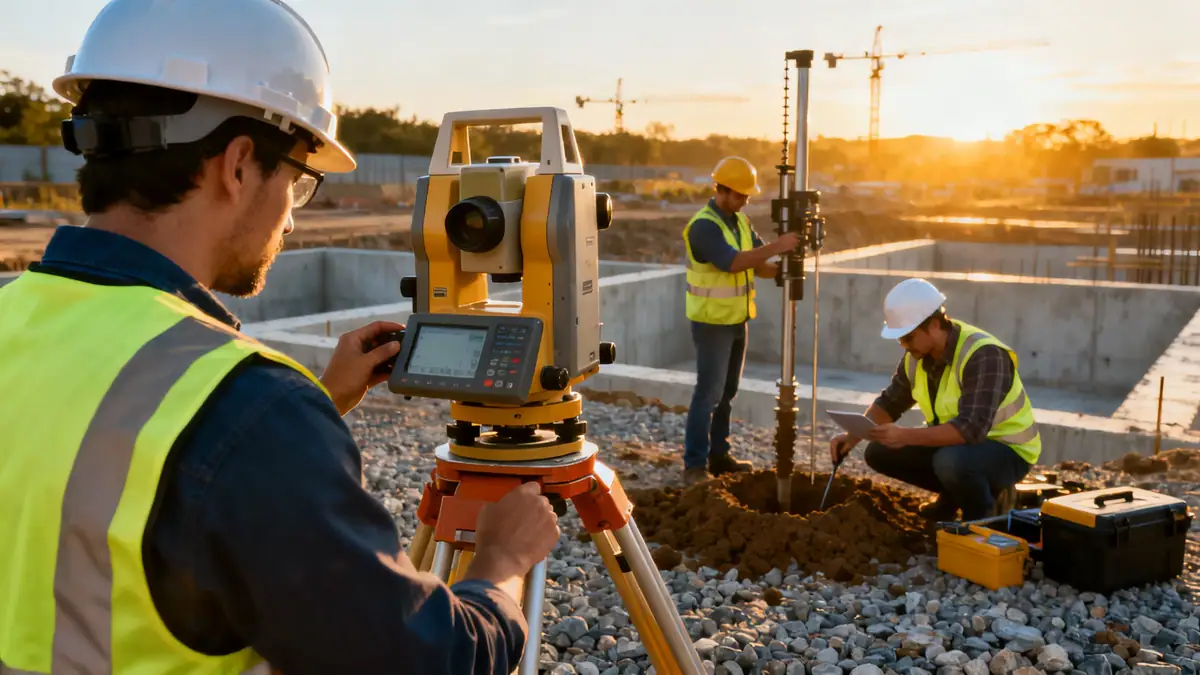
Our methodology for geotechnical engineering in Blackpool begins with a comprehensive desk study of historical maps, borehole logs, and geological records to identify potential hazards such as peat lenses or soft clays. Field investigations typically include SPT boring to retrieve disturbed and undisturbed samples at regular intervals, following ASTM D1586. In-situ testing is complemented by our soil mechanics laboratory, where classification tests (Atterberg limits, particle size distribution) and strength tests (direct shear, triaxial) are performed to characterize the glacial till and alluvial deposits common to the area. Groundwater monitoring using standpipes or piezometers is essential due to the shallow water table, which influences bearing capacity and construction dewatering plans.
Reference Technical Parameters
| Parameter | Reference Value |
|---|---|
| Predominant soil type | Glacial till with alluvial sands and clays |
| Maximum seismic acceleration (PGA) | 0.05–0.10g (low seismicity per UK National Annex to Eurocode 8) |
| Typical groundwater level | 1.0–3.0 m below ground surface |
| Bedrock depth | >30 m (Mercia Mudstone Group) |
| Typical N60 range (SPT) | 5–25 blows/0.3 m in till; 2–10 in soft clays |
Local Considerations — Blackpool
Blackpool's coastal setting presents specific geotechnical considerations. The shallow water table (1–3 m depth) necessitates careful dewatering design and may impact excavation stability. Glacial till deposits are heterogeneous, with lenses of sand and gravel altering bearing capacity. In the North Shore area, soft alluvial clays require deeper foundations or ground improvement. Our team leverages experience from projects across the Fylde coast, including a recent residential development on South Promenade where slope stability analyses were critical due to coastal erosion risks. For regional context, our services are coordinated with our geotechnical engineering en Manchester hub.
Request a Quote
Our team reviews your project and issues an initial report at no cost.
Or write us directly at [email protected]
Services in Blackpool
Applicable Standards
- Eurocode 7: Geotechnical design (BS EN 1997)
- British Standard BS 5930: Code of practice for ground investigations
- ASTM D1586: Standard test method for SPT
- National House-Building Council (NHBC) Standards Chapter 4.2
Frequently Asked Questions
What soil types are commonly found in Blackpool?
Blackpool's subsurface is predominantly glacial till, with variable layers of sands, silts, and clays. Alluvial deposits occur near the coast, and peat lenses can be encountered in low-lying areas. Detailed site investigation is recommended to characterize heterogeneity.
Is seismic design required for Blackpool?
According to the UK National Annex to Eurocode 8, Blackpool falls in a low seismicity zone with PGA values of 0.05–0.10g. While seismic design is not typically critical, it may be considered for essential infrastructure or large-span structures.
Are geotechnical studies mandatory for new construction in Blackpool?
While not legally mandatory for all developments, NHBC standards and local planning authorities strongly recommend ground investigations for new buildings. Lenders and insurers often require a geotechnical report to validate foundation design and mitigate risk.