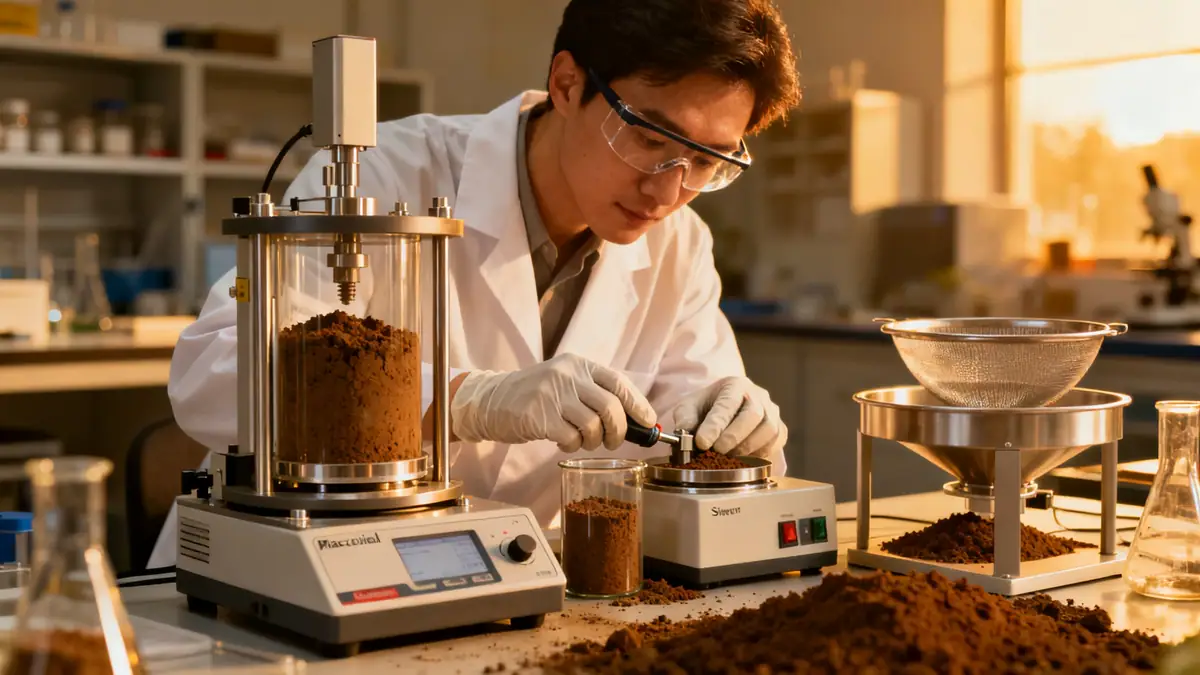
Methodology
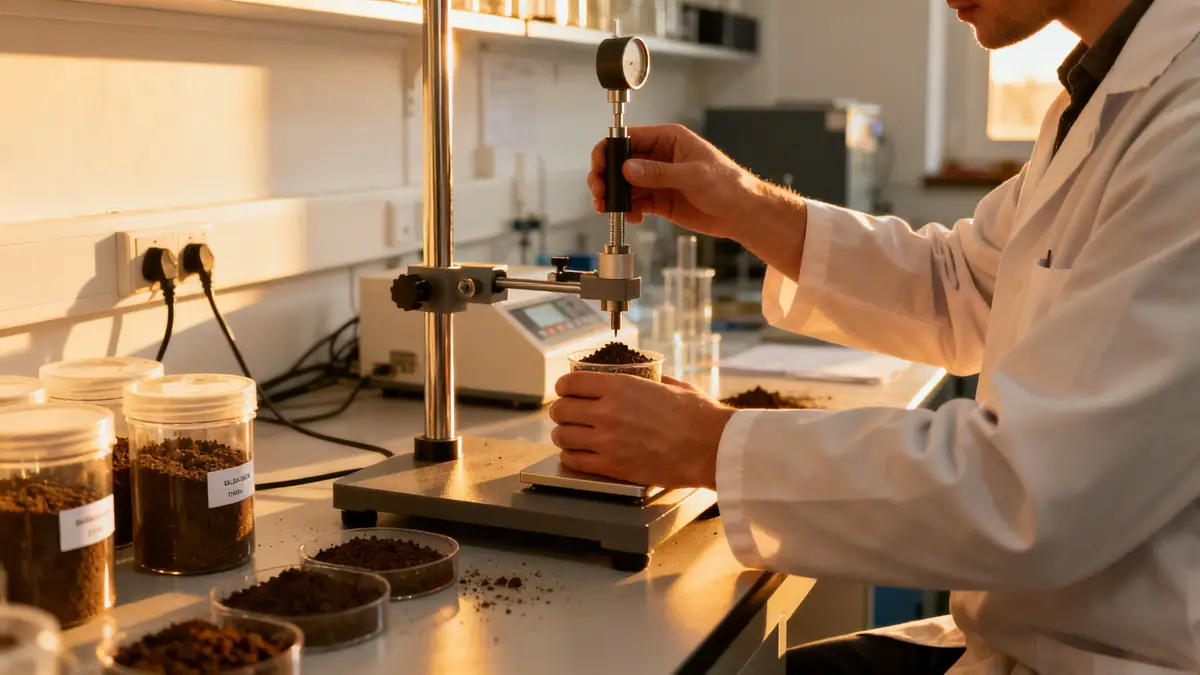
Our laboratory methodology follows a structured workflow: sample reception, classification, and testing per BS 1377 and ASTM D1586 for standard penetration test correlations. For shear strength, we perform triaxial compression tests (UU, CU, CD) on undisturbed samples, with a typical confining pressure range of 50–400 kPa. Consolidation tests use oedometers with incremental loading up to 1600 kPa. Particle size distribution is determined by sieve and hydrometer analysis. All tests are conducted by UKAS-accredited technicians, ensuring traceability and repeatability. Our integrated approach links lab results with in-situ testing, such as SPT Boring, to provide a complete ground model.
Reference Technical Parameters
| Parameter | Reference Value |
|---|---|
| Moisture Content | Range 5–60% (BS 1377:1990) |
| Liquid Limit | Range 15–100% (BS 1377:1990) |
| Undrained Shear Strength | 10–200 kPa (triaxial UU) |
| Coefficient of Volume Compressibility (mv) | 0.05–1.0 m²/MN (oedometer) |
| Angle of Internal Friction | 20°–45° (triaxial CD) |
Local Considerations — United Kingdom
Soil conditions vary significantly across the UK. In Aberdeen, glacial tills with high gravel content require modified sample preparation. In Ashford, we encounter weak clay sequences prone to settlement, necessitating detailed consolidation testing. In Aylesbury, the presence of chalk requires specialized handling to maintain in-situ moisture. Our regional teams, based in these cities, adapt testing schedules and procedures to local geology. Our laboratory in London coordinates with field offices in Bangor, Barnsley, and Basildon to ensure consistent quality. This localized approach, combined with national oversight, delivers reliable data for every project. Learn more about our regional services in Aberdeen.
Request a Quote
Our team reviews your project and issues an initial report at no cost.
Or write us directly at [email protected]
Applicable Standards
- BS 1377:1990 – Methods of test for soils for civil engineering purposes
- ASTM D1586 – Standard Test Method for Standard Penetration Test (SPT)
- Eurocode 7 (BS EN 1997-2) – Geotechnical design – Part 2: Ground investigation and testing
- BS 5930:2015 – Code of practice for ground investigations
Frequently Asked Questions
What types of soil tests are performed in your laboratory?
We perform classification tests (moisture content, Atterberg limits, particle size distribution), strength tests (triaxial, direct shear), and consolidation tests (oedometer). All tests follow BS 1377 and ASTM standards to ensure accuracy and compliance with UK regulations.
How long does it take to receive test results?
Routine tests such as moisture content and Atterberg limits are reported within 5–7 working days. Complex tests like triaxial shear or consolidation may require 2–4 weeks, depending on the number of stages and sample condition.
Are your laboratory services UKAS accredited?
Yes, our Soil Mechanics Laboratory is UKAS accredited (ISO 17025) for a range of standard tests. This accreditation ensures that our testing methods, equipment, and reporting meet rigorous quality standards required by clients and regulatory bodies.
How much does soil mechanics laboratory testing cost in the United Kingdom?
Costs vary based on test type, sample quantity, and project location. For a typical suite of classification tests, prices range from £50 to £150 per sample. Complex triaxial or consolidation tests may cost £200–£500 per sample. Contact our team for a detailed quotation tailored to your project.