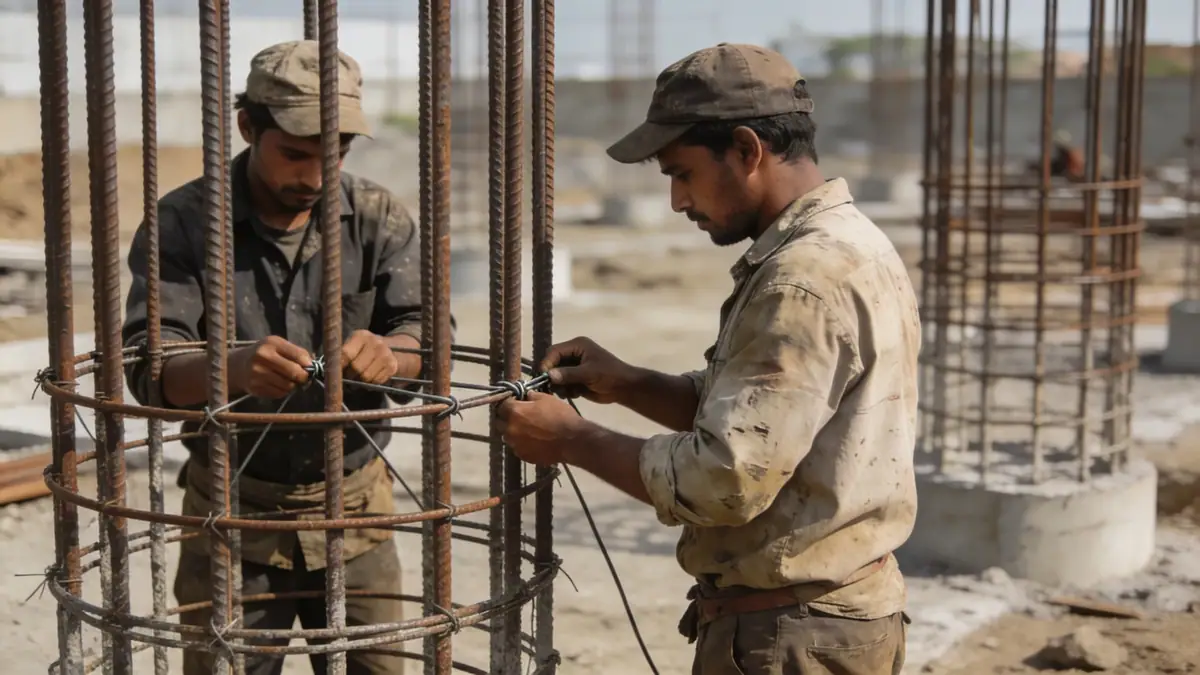
Methodology
Our methodology for geotechnical engineering in Cardiff integrates comprehensive desk studies, site walkovers, and subsurface exploration. We employ a phased approach, beginning with geological mapping and review of existing borehole records from the British Geological Survey. Fieldwork includes spt boring at intervals per ASTM D1586, typically to depths of 10–20 m, and continuous sampling for soil classification. Laboratory testing follows BS 1377 to determine index properties, shear strength, and consolidation parameters. Data is interpreted under Eurocode 7 to derive characteristic values for foundation design. This systematic process ensures robust recommendations tailored to Cardiff's glacial and alluvial deposits.
Reference Technical Parameters
| Parameter | Reference Value |
|---|---|
| Predominant soil type | Glacial till and alluvium over Mercia Mudstone |
| Maximum seismic acceleration (PGA) | 0.10–0.15 g (Eurocode 8 UK National Annex) |
| Typical groundwater level | 2–5 m below ground surface |
| Bedrock depth | 10–30 m (Mercia Mudstone) |
| Typical N60 range | 15–40 (glacial till), 5–15 (alluvium) |
Local Considerations — Cardiff
Cardiff's geology is dominated by glacial till (boulder clay) overlying Mercia Mudstone, with alluvial deposits along the River Taff and Ely. The till provides moderate bearing capacity but is prone to lateral variability, requiring careful SPT profiling. Groundwater is shallow near the coast and river valleys, influencing excavation stability. Seismic hazard is low to moderate per Eurocode 8, with PGA up to 0.15 g. Contrast exists between central Cardiff (alluvium/deep till) and northern suburbs (shallow till/bedrock). Typical projects include residential foundations and retaining walls; we also provide slope stability assessments for hillside developments. Our understanding of local conditions ensures cost-effective solutions.
Request a Quote
Our team reviews your project and issues an initial report at no cost.
Or write us directly at [email protected]
Services in Cardiff
Locations covered in Cardiff
Applicable Standards
- Eurocode 7 (BS EN 1997)
- BS 5930:2015 (Site Investigation)
- Eurocode 8 (BS EN 1998)
- BS 1377 (Methods of Test for Soils)
- ASTM D1586 (Standard Test Method for SPT)
Frequently Asked Questions
What are the typical soil types encountered in Cardiff?
Cardiff's soils primarily consist of glacial till (boulder clay) with variable cobble content, alluvial silts and clays along river valleys, and Mercia Mudstone bedrock at depth. The till offers moderate bearing capacity but requires careful testing due to heterogeneity.
What seismic standards apply to geotechnical design in Cardiff?
Seismic design in Cardiff follows Eurocode 8 (BS EN 1998) with the UK National Annex. The region is classified as low seismicity, with a peak ground acceleration of 0.10–0.15 g for the 475-year return period. Site-specific response spectra may be required for critical structures.
Are geotechnical investigations mandatory for construction in Cardiff?
While not legally mandatory for all projects, local planning authorities and building regulations (Part A) require foundation design to be based on adequate ground information. For most developments, a preliminary site investigation is strongly recommended to mitigate risks.