
Methodology
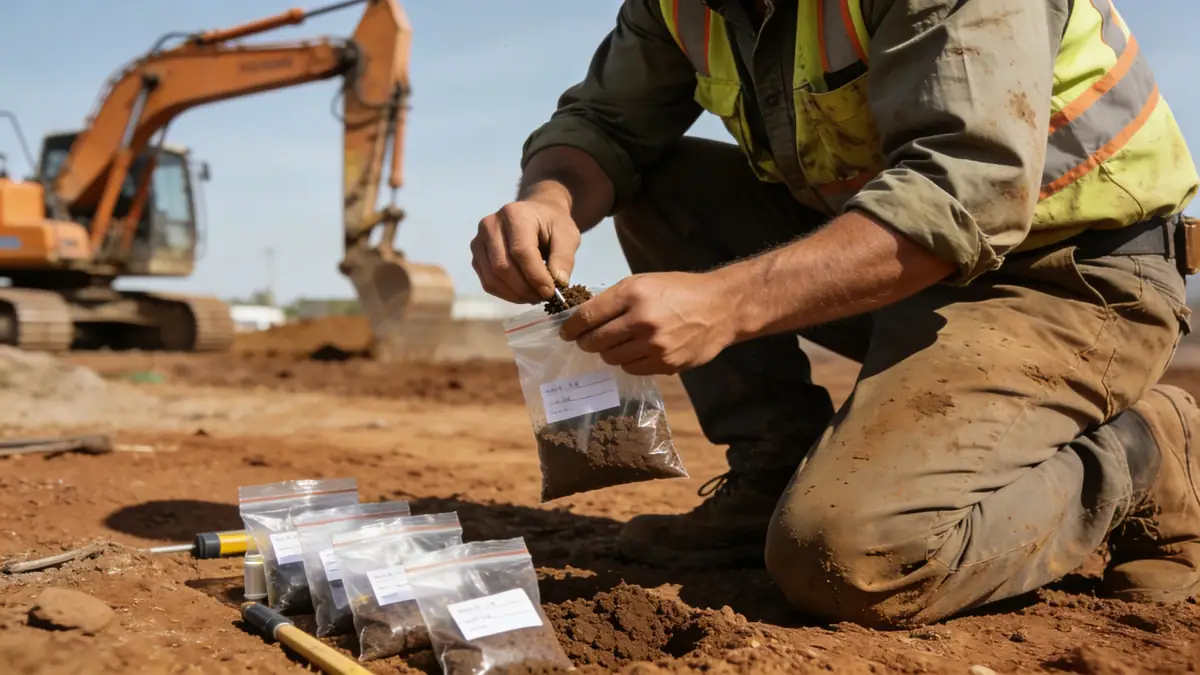
Our methodology integrates desk studies, field exploration, and laboratory testing to characterize the subsurface conditions in Northampton. We employ spt boring to obtain disturbed and undisturbed samples, following ASTM D1586 standards for standard penetration tests. This is complemented by in-situ testing and groundwater monitoring. The data are analyzed to determine soil stratigraphy, strength parameters, and settlement potential, forming the basis for our geotechnical recommendations. We adhere to the observational method where appropriate, allowing design adjustments based on actual site conditions.
Reference Technical Parameters
| Parameter | Reference Value |
|---|---|
| Predominant soil type | Sandstone, ironstone, and clay |
| Maximum seismic acceleration (PGA) | 0.05g to 0.10g (low seismicity) |
| Typical groundwater level | Variable, 2–6 m below ground level |
| Bedrock depth | Typically 5–20 m (Northampton Sand Formation) |
| Typical N60 range | 10–30 (sandstone); 5–15 (clay) |
Local Considerations — Northampton
Northampton's geology is dominated by the Northampton Sand Formation, a ferruginous sandstone, overlain by glacial till and alluvium in valley areas. Groundwater levels are variable, often influenced by the River Nene. Seismicity is low (PGA < 0.1g per UK National Annex to BS EN 1998-1). Contrasting conditions exist between the elevated sandstone areas and the low-lying clay-filled valleys, requiring distinct foundation approaches. Common issues include shallow mine workings and variable bearing capacity. For broader regional context, see geotechnical engineering in Birmingham.
Request a Quote
Our team reviews your project and issues an initial report at no cost.
Or write us directly at [email protected]
Services in Northampton
Applicable Standards
- BS 5930 (Code of practice for ground investigations)
- Eurocode 7 (EN 1997-1 and EN 1997-2)
- ASTM D1586 (Standard Test Method for Penetration Test and Split-Barrel Sampling of Soils)
- UK National Annex to BS EN 1998-1 (Seismic actions)
Frequently Asked Questions
What are the typical soil conditions in Northampton?
Northampton's subsoil primarily consists of the Northampton Sand Formation (sandstone) with overlying glacial till and alluvial clays in lower areas. Ground conditions can vary significantly over short distances, making site-specific investigations essential.
Is seismic design required for geotechnical engineering in Northampton?
The UK has low seismicity, and Northampton falls within Zone 0 (PGA < 0.1g) per the UK National Annex to Eurocode 8. Seismic design is generally not critical for most projects, but it must be considered for essential infrastructure.
Are geotechnical investigations mandatory for construction in Northampton?
While not legally mandatory for all projects, BS 5930 and Eurocode 7 strongly recommend ground investigations to ensure safe and economical design. Most local authorities require a geotechnical report for building regulations approval.