Methodology

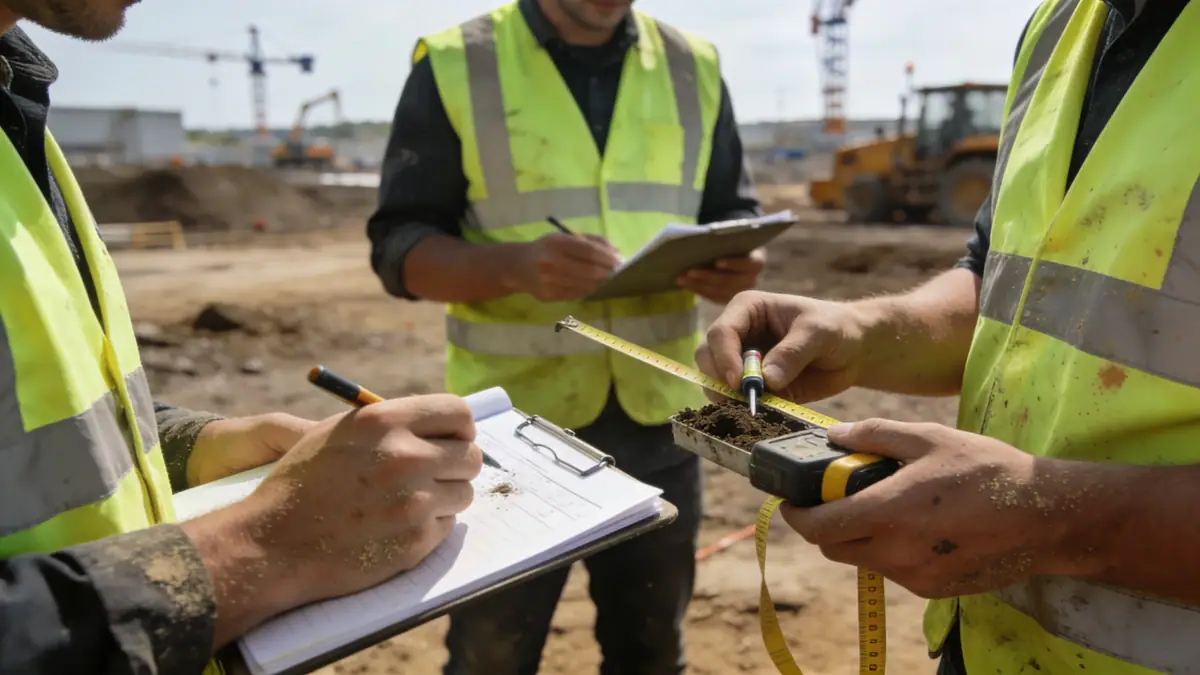
Our approach to geotechnical engineering in Norwich begins with a thorough desk study of geological maps and historical records, followed by site-specific ground investigations. We employ standard penetration testing (SPT) as per ASTM D1586 to characterise soil strata and obtain N60 values for foundation design. Laboratory testing on recovered samples determines index properties, strength, and compressibility. For Norwich's varied geology, we tailor our methodology to capture transitions between chalk, glacial till, and river terrace deposits. Detailed geotechnical interpretation informs slope stability analysis and retaining wall design, ensuring robust foundations. Learn more about our spt boring services.
Reference Technical Parameters
| Parameter | Reference Value |
|---|---|
| Predominant soil type | Chalk and glacial till with river terrace deposits |
| Maximum seismic acceleration (PGA) | 0.05g to 0.10g (low seismicity, UK National Annex to Eurocode 8) |
| Typical groundwater level | 2–5 m below ground surface (variable, higher near rivers) |
| Bedrock depth | 30–50 m (Cretaceous chalk bedrock) |
| Typical N60 range | 15–30 blows/300mm (glacial till), 30–50+ blows/300mm (chalk) |
Local Considerations — Norwich
Norwich sits on the Norwich Crag and glacial till, with chalk bedrock at depth. The city's historic core features firm chalk near surface, while areas like Bowthorpe and Tuckswood have softer alluvium and river terrace deposits. Groundwater is shallow (2–5 m) near the River Wensum, requiring dewatering for deep excavations. Seismic hazard is low (PGA <0.10g per Eurocode 8), but liquefaction potential exists in loose saturated sands. Typical projects include residential foundations in till and chalk, with retaining walls for basement excavations. For detailed ground investigation, see our soil mechanics laboratory services.
Request a Quote
Our team reviews your project and issues an initial report at no cost.
Or write us directly at [email protected]
Services in Norwich
Applicable Standards
- Eurocode 7: Geotechnical design – Part 1: General rules
- BS 5930: Code of practice for ground investigations
- ASTM D1586: Standard test method for standard penetration test (SPT)
- UK National Annex to Eurocode 8: Seismic design of structures
Frequently Asked Questions
What are the typical soil conditions in Norwich?
Norwich predominantly features chalk bedrock overlain by glacial till, with river terrace deposits and alluvium in low-lying areas. The chalk provides excellent bearing capacity, while till can be variable. Groundwater levels are moderate but can be high near the River Wensum.
Is seismic design required for buildings in Norwich?
Seismic design is generally not critical for low-rise buildings in Norwich due to low seismicity (PGA <0.10g). However, Eurocode 8 and its UK National Annex apply to certain structures, and site-specific seismic hazard assessment may be needed for critical infrastructure.
Are geotechnical investigations mandatory for new developments in Norwich?
While not always mandatory, geotechnical investigations are strongly recommended by local building control and are typically required for larger or complex projects. They are essential to assess ground conditions, foundation design, and compliance with Eurocode 7.